



Description
Industrial Rubber Elastic Bands for Fastening and Tensioning
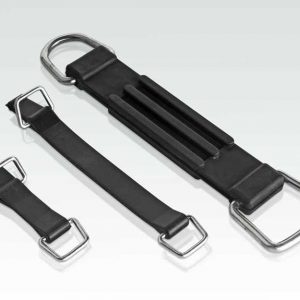
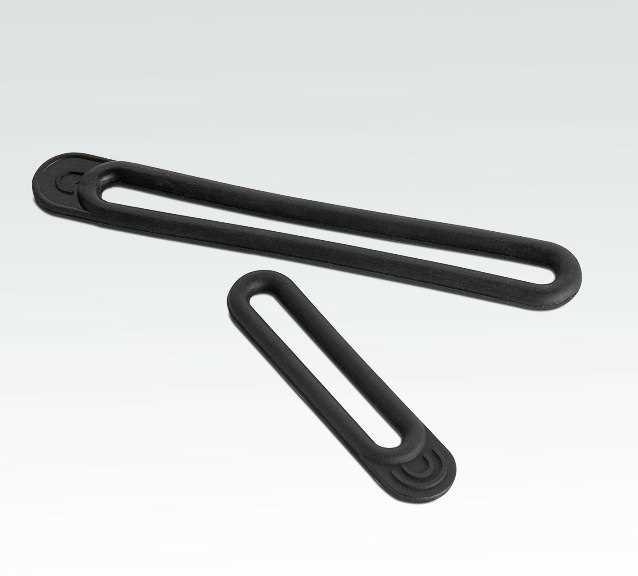
Barbieri Rubber industrial rubber elastic bands are elastic strips with round, oval or flat section, used as tensioning, fast fastening or elastic return devices. They are catalog rubber components, available in multiple diameters, sections, lengths and compounds, for industrial, automotive, bodybuilding, agricultural and logistics applications.
| Code | Internal lenght (mm) | Open lenght (mm) | Thickness Ø (mm) |
| TIR COR MAR | 55 | 77 | 5 |
| TIR LUN MAR | 115 | 138 | 5,5 |
What industrial rubber elastics are for
Industrial rubber elastics are used to fasten loads, hold accessories in place, tension belts and cables, provide elastic return in simple mechanisms, bundle objects during transport or storage. Rubber ensures elasticity, controlled recovery and higher mechanical resistance than textile elastics. They are also requested for industrial packaging, transport-load securing, accessory fastening on work vehicles.
Catalog standard version and custom designs
The standard range of industrial elastics covers the most requested lengths on the B2B market, with no tooling cost for the customer. For special geometries (custom cross-sections, non-standard lengths, dedicated compounds or colors) we produce industrial elastics to drawing: at least a preliminary drawing from the customer is required. The dedicated mold is built in cooperation with trusted tooling partners.
Frequently asked questions
Where are industrial elastics used?
Load fastening, bundling, belt tensioning, mechanical elastic return, industrial packaging, accessory locking on vehicle service equipment, agriculture, logistics. Versatile components used across many sectors.
Are they different from textile elastics?
Yes. Industrial rubber elastics deliver greater elasticity, more controlled recovery and longer life than textile elastics. They resist wear, oils, UV and repeated cycles better.
Are they resistant to outdoor exposure?
Yes, in EPDM compound. EPDM is the reference compound for UV, ozone and atmospheric agents.