







Description
Rubber Components for the Automotive Industry
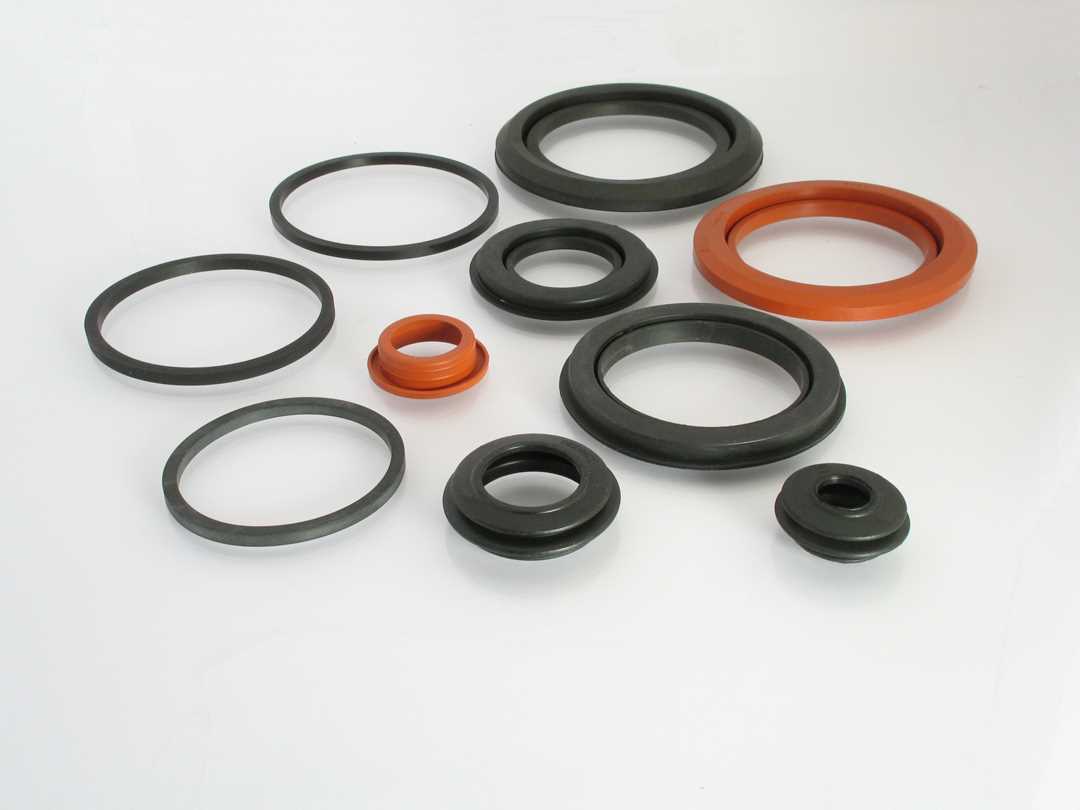
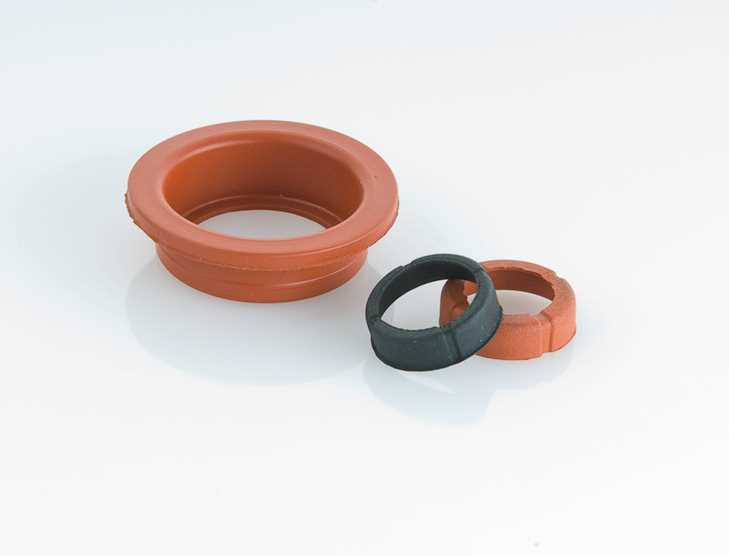
Barbieri Rubber produces rubber components for the automotive industry: standard catalog parts and custom-designed components for spare parts, vehicle outfitting and OEM production. The range includes bellows, pads, anti-vibration feet, caps, paint protections, flat seals, grommets, hood rods, elastic closures, rubber nails and other technical components. Compounds NBR, EPDM, FKM (Viton®), VMQ silicone, HNBR and NR/SBR cover typical automotive requirements: oils, fuels, wide temperature range, vibration and paint cycles.
Typical automotive requirements
The automotive sector requires rubber components resistant to mineral oils, fuels, hydraulic and brake oils, temperature range from -40 to +150 °C, vibration and repeated mechanical stress. Life cycles must be long and repeatable, with controlled tolerances and compound traceability. Painting lines require oven-resistant compounds (EPDM and VMQ silicone). Damping needs call for NR in feet and pads.
Most requested automotive components
Among the most requested automotive rubber parts: cylindrical and modular bellows for rod and moving-part protection, pads for car lifts and stop buffers, anti-vibration feet for mechanical units and workshop equipment, caps and paint protections for paint cycles, flat seals for flanged couplings, grommets for cabinets and cable bundles, elastic closures and hood rods for hoods and doors, rubber nails for fast bodywork fastening.
Typical automotive compounds
NBR is the reference compound for mineral oils and fuels, FKM (Viton®) for aggressive oils and solvents, HNBR for heavy-duty hydraulics with high temperatures, EPDM for paint lines and outdoor applications, VMQ silicone for oven cycles and high-temperature applications, NR/SBR for anti-vibration feet and damping applications. Final selection depends on fluids, temperatures, mechanical stress and process cycles.
| Compound | Temperature range | Feature | Typical applications |
| NBR (Nitrile) | -40 / +130 °C | Mineral oil resistance | Hydraulics, automotive |
| EPDM | -40 / +100 °C | Water, steam, ozone, UV | Hydraulics, outdoor, photovoltaic |
| VMQ (Silicone) | -60 / +200 °C | High temperature | Food, high-T |
| FKM (Viton®) | -10 / +180 °C | Aggressive oils, solvents | Chemical, automotive, hydraulics |
| HNBR | -20 / +160 °C | Oil + high temperature | Heavy-duty hydraulics |
| NR / SBR | -50 / +90 °C | Mechanical elasticity | Anti-vibration, general |
Standard components and custom designs
Most automotive components are supplied from catalog as standard rubber parts, with short lead times and no tooling cost. For brand-specific parts, dedicated geometries, custom shapes or special couplings, we produce items on drawing: at least a preliminary drawing from the customer is required. The dedicated mold is manufactured in cooperation with our trusted toolmaking partners. Production is ISO 9001 certified with compound traceability and process controls.
Frequently asked questions
Which automotive components are available from stock?
Bellows, pads, anti-vibration feet, caps, paint protections, flat seals, grommets, elastic closures, hood rods, rubber nails. Most recurrent sizes are standard catalog items, with no tooling cost for the customer.
Do you produce custom rubber parts for automotive?
Yes. For custom geometries, dedicated shapes or brand-specific requests we produce items on drawing. At least a preliminary drawing from the customer is required. The dedicated mold is manufactured in cooperation with our trusted toolmaking partners.
Which compound should I choose for automotive oil exposure?
NBR is the standard choice for mineral oils and fuels. FKM (Viton®) for aggressive oils, solvents and biofuels. HNBR for heavy-duty hydraulics with combined high temperatures. Selection is done case by case.
Do you produce rubber-to-metal bonded automotive parts?
Yes. We do rubber-to-metal bonding on pads, feet, supports, elastic closures and hood rods, with threaded inserts or dedicated hooks for direct fastening to the frame.
Which quality standards do you follow?
ISO 9001 certified production with compound traceability and process control. On request we handle PPAP, ISIR, first article inspection and conformity documentation for automotive suppliers.
