





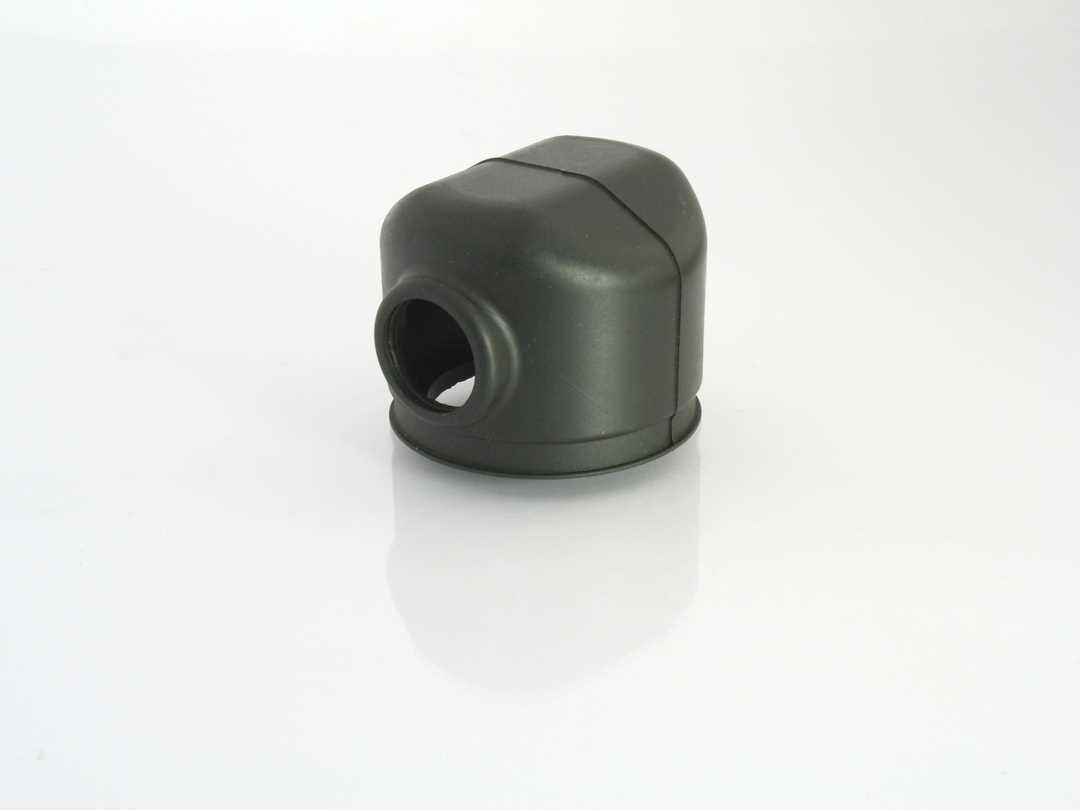
Description
Rubber Cable Grommets for Cable Protection and Through-Holes
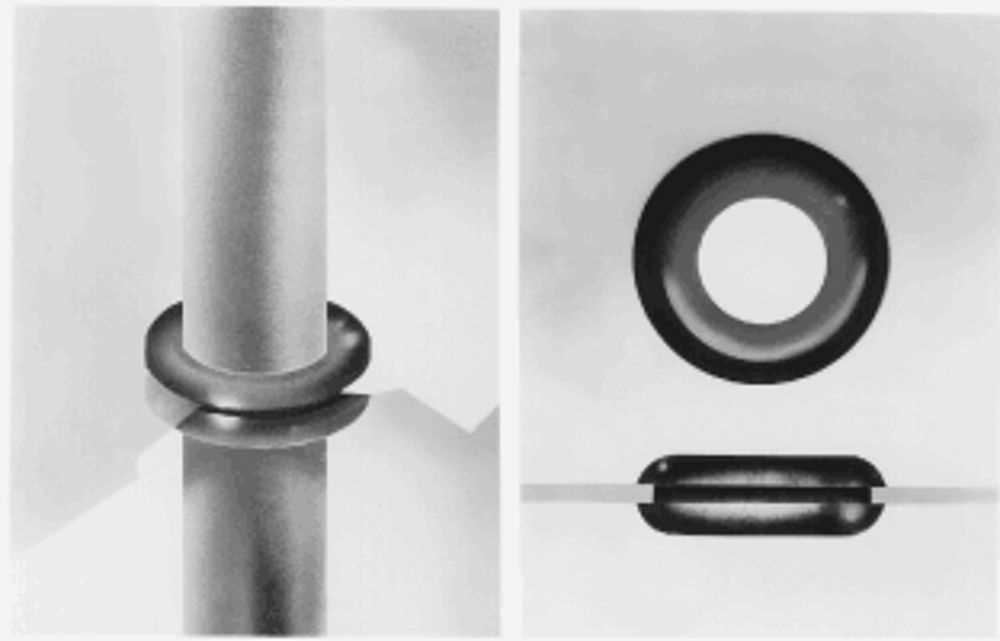
Barbieri Rubber rubber cable grommets are flexible rings designed to protect cables, pipes and wire bundles passing through panels, bodies, frames and cabinets. Rubber eliminates cable rubbing against the hole edge, preventing insulation damage, and provides electrical and mechanical insulation. They are catalog rubber components, in multiple hole and cable diameters, and in compounds suitable for different environments.
Standard available measures
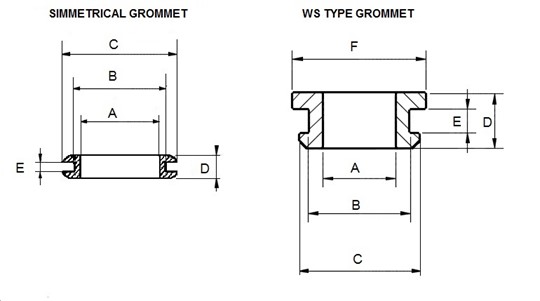
Grommets are available in the measures listed below.
Can’t find the right measure? Contact us for custom manufacturing.
| Code | Ø A (mm) | Ø B (mm) | Ø C (mm) | D (mm) | E (mm) | F (mm) | Note |
| P 03.2X6 | 3,2 | 6 | 8 | 4,6 | 1,6 | – | |
| P 04X11 | 4 | 11 | 16 | 6,5 | 3 | – | |
| P 04.4X13 | 4,4 | 13 | 19 | 11 | 3 | – | |
| P 04X07 | 4 | 7 | 11 | 7 | 1 | – | |
| P 05X6.7R | 5 | 6,7 | 11 | 7,6 | 2 | – | |
| P WS4 | 5 | 10 | 11 | 12,5 | 6 | 16 | WS,WS type |
| P 06X8 | 6 | 8 | 11 | 5,6 | 1,6 | – | |
| P 06X9.5×14 | 6 | 9,5 | 14 | 8,5 | 4,5 | – | |
| P 06X9.6 | 6 | 9,6 | 14 | 8 | 1,8 | – | |
| P 06X10 | 6 | 10 | 12 | 5,5 | 1,5 | – | |
| P 06X10.5 | 6 | 10,5 | 15 | 8 | 3 | – | |
| P 06.9X14 | 6,9 | 14 | 20 | 7 | 1,5 | – | |
| P 07X09 | 7 | 9 | 14 | 8 | 2 | – | |
| P WS6 | 7 | 12 | 13 | 12,5 | 6 | 18 | WS,WS type |
| P 07.3X12 | 7,3 | 12 | 20 | 8,5 | 2 | – | |
| P WS7.5 | 7,5 | 10 | 13 | 6,5 | 1 | 15 | WS,WS type |
| P 07.6X13.5 | 7,6 | 13,5 | 20 | 9 | 3,5 | – | |
| P 08X11 | 8 | 11 | 14,5 | 7 | 2 | – | |
| P 08X14 | 8 | 14 | 20 | 7 | 1,5 | – | |
| P 09X13 | 9 | 13 | 21 | 11 | 3 | – | |
| P 09X11 | 9 | 11 | 16 | 8,5 | 3 | – | |
| P WS8 | 9 | 14 | 15 | 12,5 | 6 | 20 | WS,WS type |
| P 9.5X15.9 | 9,5 | 15,9 | 22,2 | 7,9 | 1,6 | – | |
| P 10X13 | 10 | 13 | 18 | 6,7 | 1,5 | – | |
| P 10X16 | 10 | 16 | 22 | 15 | 5 | – | |
| P 10X20 | 10 | 20 | 30 | 11,5 | 3,5 | – | |
| P 11-15X20 | 10,5 | 20 | 26 | 8,2 | 2 | – | |
| P WS10 | 11 | 16 | 17 | 12,5 | 6 | 22 | WS,WS type |
| P 12X16 | 12 | 16 | 21,5 | 12,5 | 3,5 | – | |
| P 12X21.5 | 12 | 21,5 | 30 | 12,5 | 3,5 | – | |
| P 12X16X21 CHI | 13 | 17 | 22 | 7 | 1,8 | – | Closed |
| P 13X17 | 13 | 17 | 22 | 7 | 1,8 | – | |
| P WS12 | 13 | 18 | 18,5 | 12,5 | 6 | 25 | WS,WS type |
| P WS13 | 13 | 19 | 22 | 8 | 1,5 | – | WS,WS type |
| P WS13.5 | 13,5 | 16,5 | 20 | 12 | 3,5 | 25 | WS,WS type |
| P 14X21 | 14 | 21 | 29 | 13 | 3 | – | |
| P 15X20 | 15 | 20 | 26 | 8,5 | 2 | – | |
| P 15X24 | 15 | 24 | 30 | 15 | 3 | ||
| P WS14 | 15 | 25 | 25,5 | 14 | 6 | 33 | WS,WS type |
| P 16X18 | 16 | 18 | 24 | 11 | 3,6 | – | |
| P WS16.1 | 16 | 18,5 | 22 | 8 | 2 | 29 | WS,WS type |
| P WS16 | 16,5 | 24,7 | 25 | 14 | 6 | 32,5 | WS,WS type |
| P 18X25 | 17,5 | 25 | 34 | 12 | 4 | – | |
| P 18X25 CHI | 17,5 | 25 | 34 | 12 | 4 | – | Closed |
| P 19X21X1.5 | 19 | 21,6 | 28 | 11 | 1,5 | 28 | WS,WS type |
| P 19X21X3.5 | 19 | 21,6 | 28 | 11 | 3,5 | 28 | WS,WS type |
| P 19X21X4 | 19 | 21,6 | 28 | 9 | 3,6 | 28 | WS,WS type |
| P 19X22 | 19 | 22 | 26,5 | 7 | 1,5 | – | |
| P 20X27 | 20 | 27 | 38 | 17 | 5 | – | |
| P 20X29 | 20 | 29 | 40 | 13,8 | 4 | – | |
| P 22.5X30 | 22,5 | 30 | 39 | 13,4 | 2,5 | – | |
| P 26X43 | 26 | 43 | 50 | 14 | 4 | 57 | WS,WS type |
| P 27X43 | 26 | 43,5 | 50 | 16 | 6 | 58 | WS,WS type |
| P 29X37 | 29 | 37 | 44 | 13 | 4 | – | |
| P 32X35 | 32 | 35 | 50 | 10 | 3 | – | |
| P WS32X36 | 32 | 36 | 40 | 18 | 5 | 42 | WS,WS type |
| P 36X45 CHI | 36 | 45 | 55 | 15 | 5 | – | Closed |
| P 44X50 | 44 | 50 | 64 | 12,5 | 5 | – | |
| P 60X65 | 60 | 65 | 79 | 9 | 2,5 | – | |
| P 94X135 | 94 | 135 | 155 | 30 | 10 |
What a cable grommet is for
The grommet fits into a round hole on a panel or structure and lines its edge, creating a smooth flexible seat for the cable. Without a grommet, the cable suffers cutting and abrasion against the metal edge, with risk of insulation exposure and short circuits. The grommet distributes mechanical stress, damps vibration and blocks ingress of dirt, dust and moisture. Double-groove grommets exist for through-holes, single-groove ones for one-side closures.
Available compounds and typical hardness
The most common compounds for grommets are NR/SBR for general use, NBR where oils are present, EPDM for outdoor and UV, VMQ silicone for high temperatures, FKM (Viton®) for aggressive chemical environments. Typical hardness is 50-70 Shore A. For frequently moving cables softer compounds are chosen, for static fastening higher hardness.
| Compound | Temperature range | Feature | Typical applications |
| NBR (Nitrile) | -40 / +130 °C | Mineral oil resistance | Hydraulics, automotive |
| EPDM | -40 / +100 °C | Water, steam, ozone, UV | Outdoor, photovoltaic |
| VMQ (Silicone) | -60 / +200 °C | High temperature, biocompatible | Food, medical |
| FKM (Viton®) | -10 / +180 °C | Aggressive oils and solvents | Chemical, automotive |
| NR / SBR | -50 / +90 °C | Mechanical elasticity | Anti-vibration, general |
Catalog standard version and custom designs
Barbieri Rubber’s standard grommet range covers the most recurrent hole and cable diameters, with active tooling and no tooling cost for the customer. For special sizes, custom profiles or dedicated compounds we produce grommets on drawing: at least a preliminary drawing from the customer is required, with hole diameter, cable diameter, panel thickness and target compound. The dedicated mold is manufactured in cooperation with our trusted toolmaking partners.
Frequently asked questions
How do I size a grommet?
Three main dimensions are needed: hole diameter, cable or bundle diameter, panel thickness. Standard grommets in our catalog are organized along these three dimensions; for special sizes the custom-design version applies.
Are they available from stock?
Yes, an extensive series of grommets is standard catalog rubber, with no tooling cost for the customer. For special sizes or profiles the custom-design version applies.
Which compound should I choose for outdoor use?
EPDM is the reference compound for UV, ozone and atmospheric agents. For harsher environments VMQ silicone and FKM (Viton®) are available.
Do grommets protect from moisture?
Yes, they significantly reduce ingress of dirt and moisture through the cable hole. For high IP-rated sealing, dedicated cable glands are required.
Which hardness should I choose?
Typically 50-70 Shore A. For frequently moving cables, softer compounds reduce stress on the cable; for static fastening, higher hardness improves stability.
