



Description
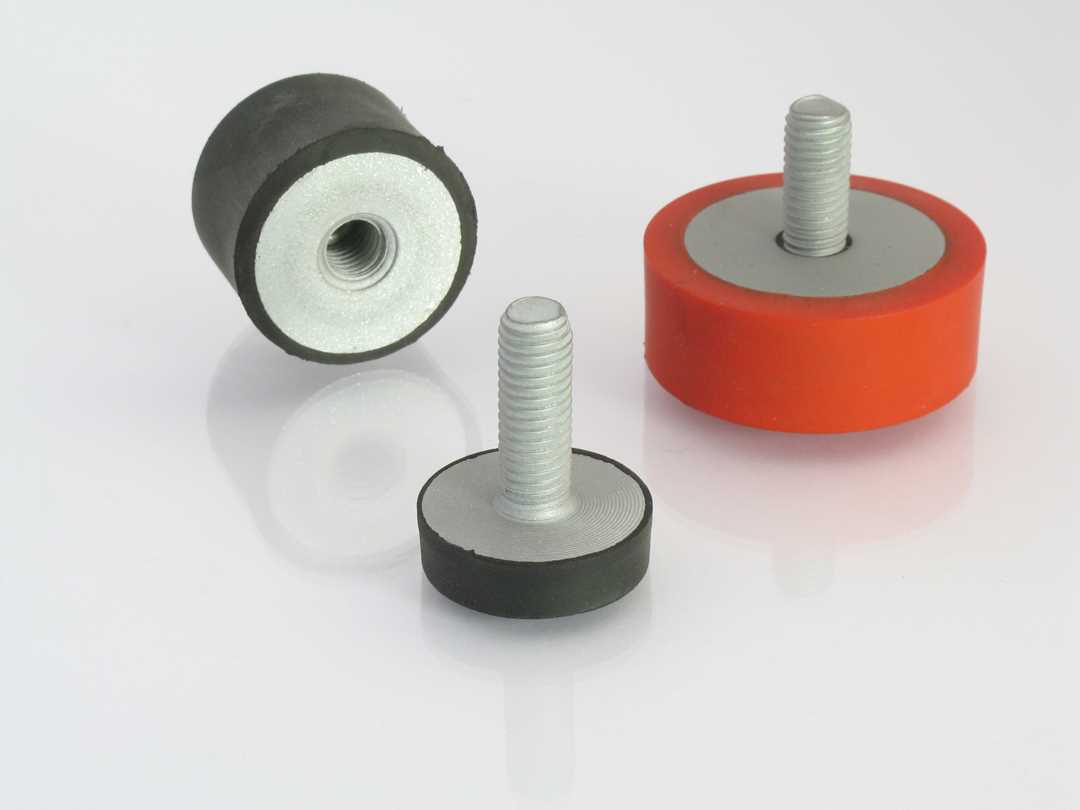
Cylindrical Rubber Feet with Metal Insert
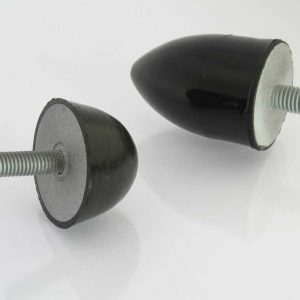
Barbieri Rubber cylindrical rubber feet are anti-vibration supports with cylindrical shape and threaded metal insert, designed for machine mounting, vibration damping and acoustic isolation. They are catalog rubber components, available in multiple diameters, heights and hardness, with standard metric threads. The cylindrical shape ensures stable footprint, uniform load distribution and predictable stiffness.
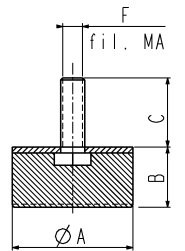
| Codice | Ø A (mm) | Height B (mm) | Screw C (mm) | Ø Thread F | Max Load (Kg) |
|---|---|---|---|---|---|
| PIE 25/18RM6 | 25 | 18 | 23 | M6 | 70 |
| PIE 25/22 PM8X20 | 25 | 22 | 20 | M8 | 70 |
| PIE 25X10 M8X28 | 25 | 10 | 28 | M8 | 60 |
| PIE 25X15 | 25 | 15 | 14 | M8 | 60 |
| PIE 40/10RM8X28 | 40 | 10 | 28 | M8 | 110 |
| PIE 40/15RM8X20 | 40 | 15 | 20 | M8 | 110 |
| PIE 40/15RM8X22 | 40 | 15 | 22 | M8 | 110 |
| PIE 40/30RM8 | 40 | 30 | 23 | M8 | 120 |
| PIE 40/30RM10 | 40 | 30 | 23/17 | M10 | 120 |
| PIE 40/40RM8 | 40 | 40 | 23 | M8 | 130 |
| PIE 40/40PM10 | 40 | 40 | 20 | M10 | 130 |
| PIE 48X14RM10X25 | 48 | 14 | 25 | M10 | 140 |
| PIE 48X14PM10X35 | 48 | 14 | 35 | M10 | 140 |
| PIE 48X14PM10X70 | 48 | 14 | 70 | M10 | 140 |
| PIE 48/15RM10X43 | 48 | 15 | 43 | M10 | 140 |
| PIE 50/20RM10 | 50 | 21 | 20 | M10 | 150 |
| PIE 50/20RM12 | 50 | 20 | 48 | M12 | 160 |
| PIE 110/30RM14 | 110 | 30 | 70 | M14 | 200 |
What a cylindrical anti-vibration foot is for
Cylindrical feet are the most common solution for mounting machines, benches, electrical cabinets, compressors, pumps, generators and technical enclosures. Rubber absorbs mechanical vibration and reduces noise transmission to the floor, while the threaded metal insert (stud or bushing) allows direct fastening to the machine frame. The cylindrical cross-section is easy to size at design stage because stiffness depends linearly on diameter, height and compound hardness.
Available compounds
Standard compound: SBR. NBR is preferred for workshops and oil exposure, EPDM for outdoor and photovoltaic applications, VMQ silicone for high temperatures, FKM (Viton®) for aggressive environments. Typical hardness ranges from 40 to 80 Shore A: lower hardness increases damping, higher hardness increases static load capacity.
| Compound | Temperature range | Feature | Typical applications |
| SBR | -20 / +90 °C | Balanced mechanical performance | General-purpose feet |
| NBR (Nitrile) | -40 / +130 °C | Mineral oil resistance | Workshops, hydraulics |
| EPDM | -40 / +100 °C | UV, ozone and outdoor resistance | Outdoor, photovoltaic |
| VMQ (Silicone) | -60 / +200 °C | High temperature | Ovens, hot environments, food |
| FKM (Viton®) | -10 / +180 °C | Aggressive oils and solvents | Chemical, automotive |
Catalog standard versions and custom designs
The standard range of cylindrical feet covers the most recurrent diameters and threads on the B2B market (M6, M8, M10, M12 and other metric threads), in multiple heights. For catalog codes there is no tooling cost. For specific requirements (special hardness, non-standard compounds, oversize dimensions, dedicated inserts, customer marking) we produce cylindrical feet to drawing: at least a preliminary drawing from the customer is required. The dedicated mold is built in cooperation with trusted tooling partners.
Industrial applications of cylindrical feet
Cylindrical feet are used on industrial machinery, test benches, compressors, pumps and hydraulic units, electrical cabinets, technical enclosures, condensers, chillers, AHUs, generators, workbenches and workshops. They are also requested by manufacturers of agricultural machinery, vehicle service equipment and photovoltaic systems. Production includes rubber-to-metal bonding for threaded inserts firmly bonded to the rubber body.
Frequently asked questions
What is the difference between cylindrical and cone feet?
The cylindrical foot has a constant cross-section, ensuring greater footprint stability and more predictable stiffness. The cone foot has a variable cross-section and a progressive force-deflection curve, useful where increasing damping with load is needed. Selection depends on load, envelope and vibration profile.
Are cylindrical feet available from stock?
Yes, the most requested diameters, heights and thread sizes are standard catalog rubber components in stock, with no tooling cost. For special sizes or threads we produce custom feet with a dedicated mold.
Is the metal insert firmly bonded to rubber?
Yes. Cylindrical feet are produced by rubber-to-metal bonding: rubber vulcanizes directly onto the insert, ensuring a stable bond suitable for industrial use, including repeated stress cycles.
Can I request special compounds for aggressive environments?
Yes. On request we produce cylindrical feet in NBR, EPDM, VMQ silicone, FKM (Viton®) or other dedicated compounds resistant to oils, solvents, high temperatures, ozone, UV or outdoor exposure. Compound choice is defined based on service conditions.