




Description
Modular Rubber Bellows — Plug-and-Play Kit, Always In Stock
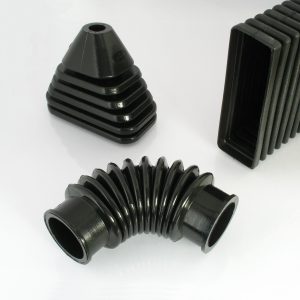
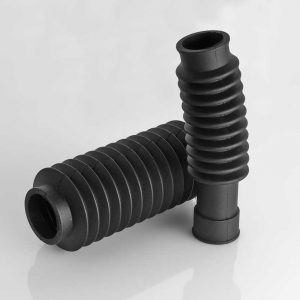
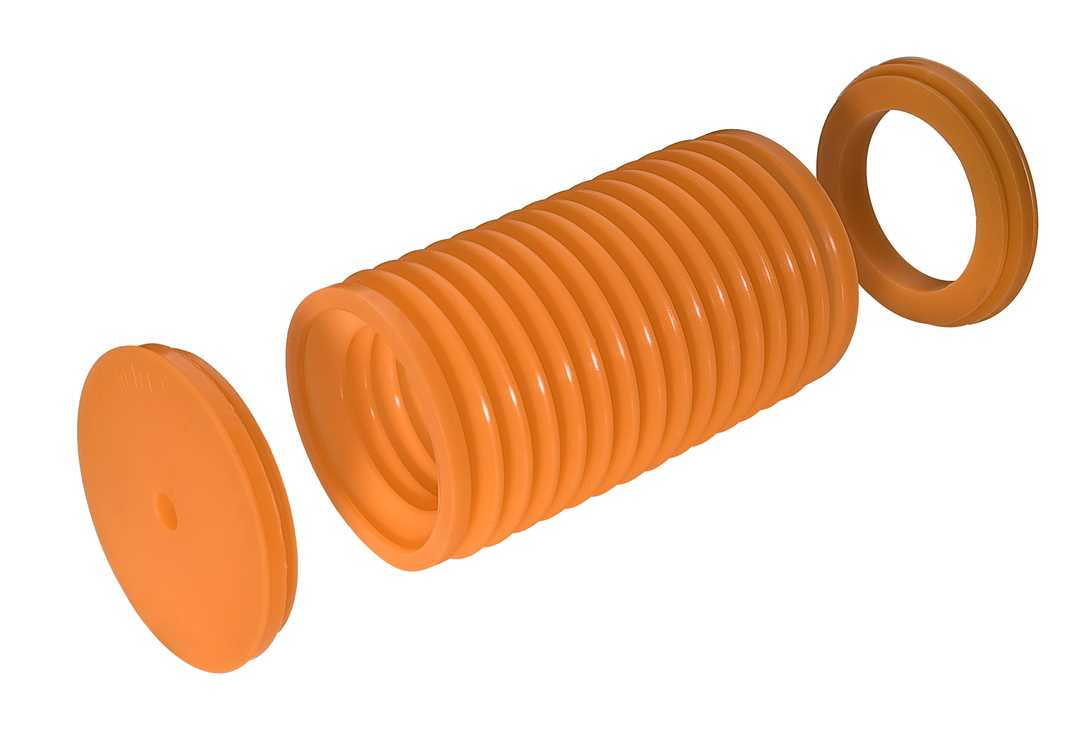
Barbieri Rubber modular bellows are cylindrical protective bellows built around a kit system: bellows body, end collars and joints fit together with no glue, no special tooling and no dedicated equipment. They are the simplest and most economical way to protect a rod, a lead screw, a pneumatic or hydraulic cylinder, a linear actuator. Eight size classes, three standard compounds (NBR, EPDM, food-grade orange silicone RAL 2004), ready to ship from stock.
Watch the video below to see how easy it is to use the modular bellow
Why modular: no mold, no tooling cost
The difference compared to a traditional bellows is sharp. The modular bellows requires no dedicated mold: the kit components are standard catalog items, already molded and ready to assemble. No tooling cost, no minimum batch tied to mold amortization, no production lead time. The system is designed to be used as it is, autonomously by the customer, and is therefore not offered in a custom-design version: its purpose is exactly to solve a mechanical-protection problem right now with what is already in stock.
How the kit is built
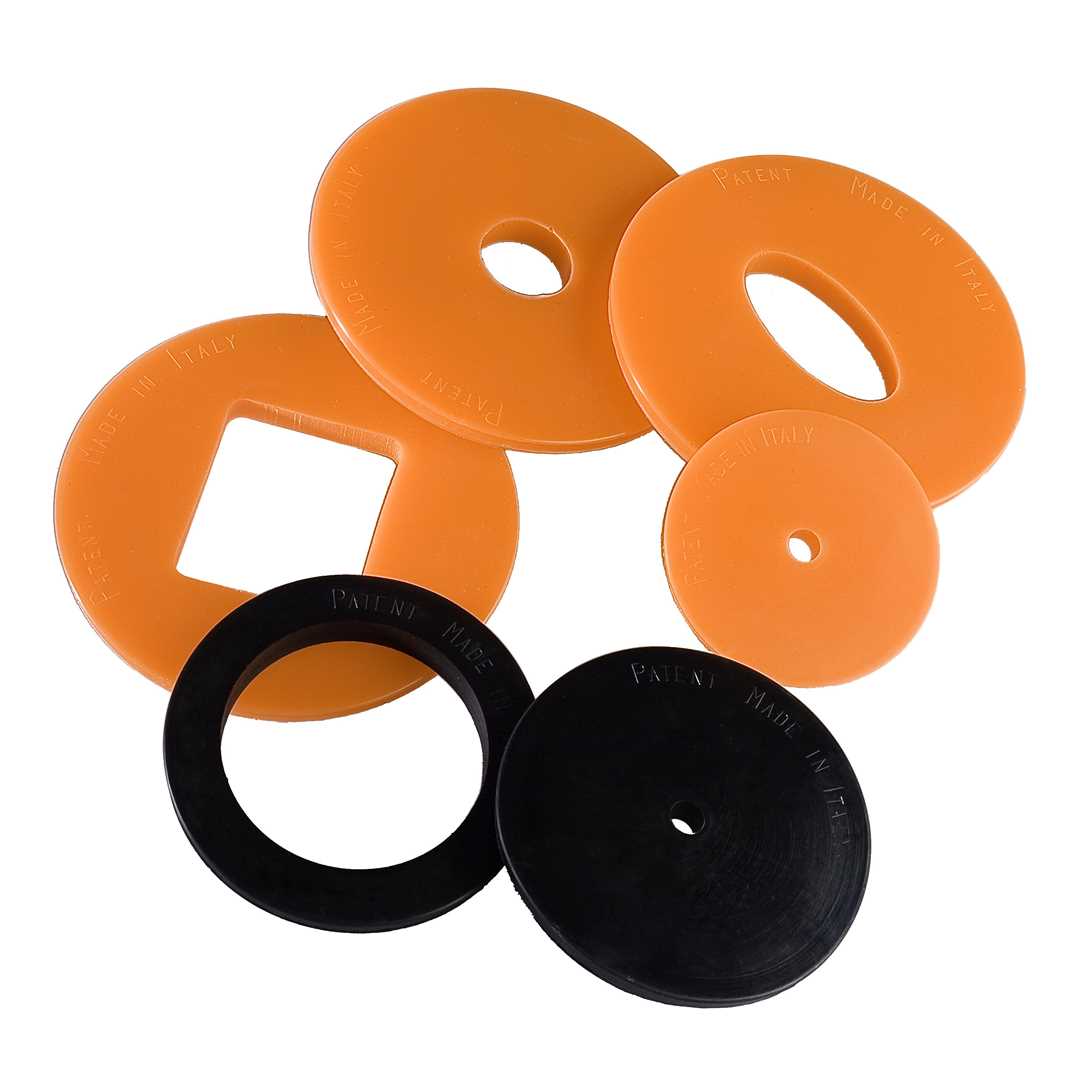
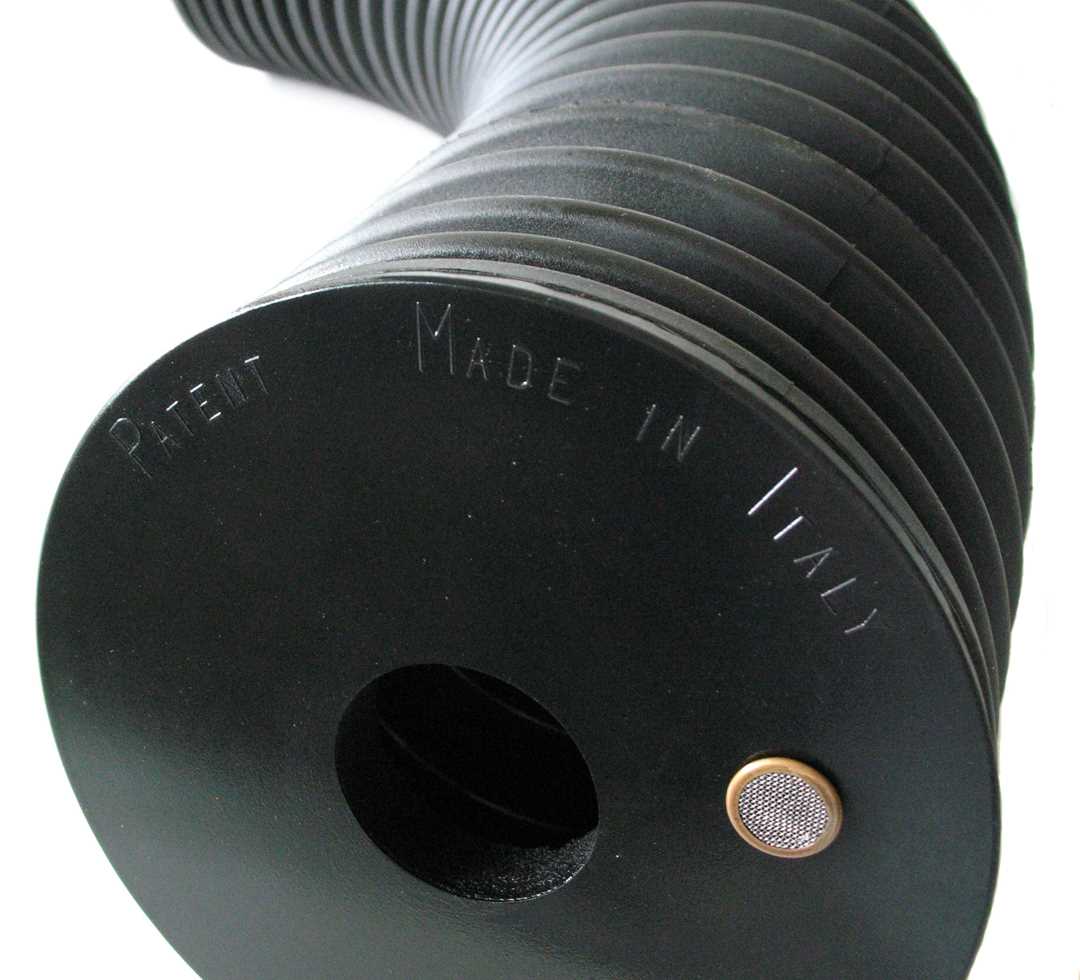
The Barbieri Rubber modular system is made of five item codes, identified by the prefix BLW followed by class and compound. The bellows (BLW B) is the extendable body — the accordion tube absorbing the stroke. The collars (BLW C) are the two end elements that close the bellows onto the machine flanges: each collar has a centered pre-hole (10 mm on classes 60–120, 30 mm on class 135) that the customer drills to the desired diameter, recommended 1.5–2 mm smaller than the flange to obtain a perfect elastic grip. The joint (BLW J) is optional and connects two or more bellows for longer assemblies. The plastic disc (BLW D) snaps into the joint and supports the bellows weight when several modules are connected horizontally. The filter (BLW F) is fitted at one end to keep internal air clean when the bellows works on long strokes.
Order code
The coding is modular and self-explanatory: BLW + component letter + class + compound letter. Examples: BLW B 106 R = bellows class 106 in NBR; BLW C 120 E = collar class 120 in EPDM; BLW J 83 S = joint class 83 in orange silicone; BLW D 135 = plastic disc for joint class 135; BLW F = filter. For a complete medium-length protection one bellows and two collars in the same class and compound are enough; for longer assemblies, modules and joints are added.
Industries served
The modular bellows is the natural choice for machine shops, machine builders, industrial maintenance and any case where a fast and cost-effective solution is needed: protection of rods and cylinders in oil hydraulics and pneumatics, lead screws and linear actuators on machine tools, outdoor actuators on photovoltaic plants (in EPDM), food and pharmaceutical applications (in orange silicone, food-contact compliant), telescopic joints, moving parts exposed to dust, swarf, oil or water splashes.
Frequently asked questions
How are class and length selected?
Start from the diameter of the flange the collar will grip and pick the class whose pre-hole, drilled 1.5–2 mm smaller than the flange diameter, gives the correct elastic grip. For the length, compare the stroke to be protected with values L (closed/open) in the table: if a single class is not enough, joints and modules are added. In case of doubt, send flange dimension, minimum and maximum stroke and working direction (vertical or horizontal).
Are special tools or skills needed for assembly?
No. Bellows, collars and joints assemble by hand snap-fit. The only required operation on the collars is drilling the pre-hole to the flange diameter, which can be done with a normal drill press. For long horizontal assemblies, plastic discs BLW D should be inserted in the joints to prevent body sagging.
Which compound to choose between NBR, EPDM and silicone?
NBR (black) for environments with mineral oils, greases and hydrocarbons: standard choice for oil hydraulics, pneumatics and machine shops. EPDM (black) when the bellows works outdoor or is exposed to UV, ozone and weather, typical of photovoltaic and outdoor applications; not resistant to mineral oils. Orange silicone RAL 2004 when high temperatures (up to +200 °C) or food-contact compliance are required: food & beverage, pharmaceutical, ovens, clean environments.
Are they really ready to ship?
Yes. All standard combinations of class + compound listed in the table are normally available from stock. For large quantities or less common configurations (for example 135 medium/long in NBR) it is advisable to confirm availability when issuing the request for quotation.