




Description
Rubber Flat Seals and Gaskets for Industrial Sealing
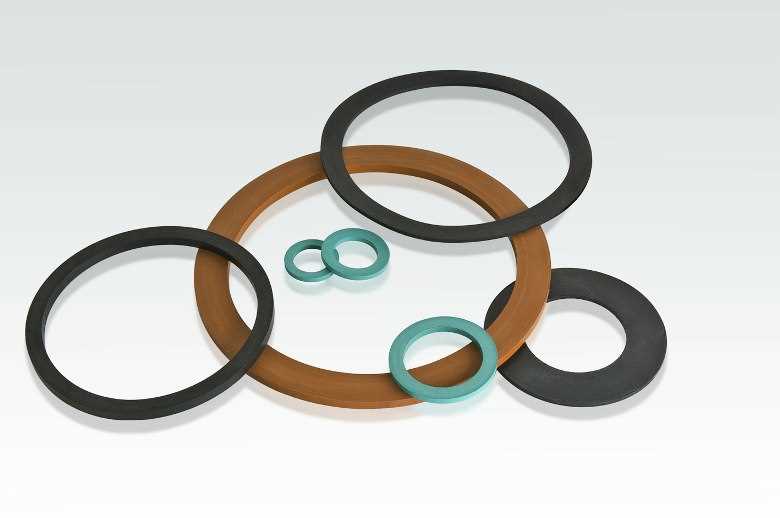
Barbieri Rubber rubber flat seals and gaskets are washer-shaped technical components designed to provide reliable sealing in industrial, automotive and electromechanical applications. Compared to traditional O-rings, they offer a wider sealing surface, ensuring better effectiveness even under variable compression. They suit both light pressures and high crushing loads, making them ideal for a wide range of static and dynamic applications.
| O.D. | I.D. | H min – H max (from the cutting sleeve) |
|---|---|---|
| O.D. | I.D. | H min – H max (from the cutting sleeve) |
| 10 | 4,5 | 1-50 |
| 10 | 6 | 1-50 |
| 12 | 5 | 1-30 |
| 12 | 6 | 1-30 |
| 12,6 | 10 | 1-75 |
| 12,8 | 10 | 1-70 |
| 14,5 | 10 | 1-70 |
| 15,6 | 8,5 | 1-58 |
| 15,2 | 11,1 | 1-60 |
| 17,8 | 11 | 1-70 |
| 18 | 10 | 1-70 |
| 18 | 11,8 | 1-70 |
| 19 | 10 | 1-70 |
| 19,2 | 11,5 | 1-80 |
| 19,5 | 10,5 | 1-80 |
| 19,6 | 10 | 1-70 |
| 20 | 6,5 | 1-55 |
| 20 | 10,5 | 1-35 |
| 20 | 11 | 1-80 |
| 20 | 12 | 1-80 |
| 20 | 13 | 1-70 |
| 22 | 8 | 1-70 |
| 22 | 16,5 | 1-70 |
| 22,4 | 17,5 | 1-70 |
| 23 | 9 | 1-70 |
| 23 | 17 | 1-70 |
| 23,5 | 12 | 1-70 |
| 23,5 | 14,8 | 1-70 |
| 24 | 12 | 1-80 |
| 24 | 18 | 1-70 |
| 24,5 | 17 | 1-70 |
| 25 | 13,5 | 1-70 |
| 25 | 14 | 1-70 |
| 25 | 19 | 1-70 |
| 26 | 6 | 1-/ |
| 26 | 12 | 1-70 |
| 26 | 9 | 1-80 |
| 26 | 17,6 | 1-70 |
| 27 | 15 | 1-70 |
| 27 | 16 | 1-70 |
| 27 | 20 | 1-70 |
| 28 | 6,5 | 1-70 |
| 28 | 15 | 1-70 |
| 28 | 18 | 1-70 |
| 28 | 20 | 1-70 |
| 29,5 | 14,5 | 1-70 |
| 30 | 12 | 1-70 |
| 30 | 16 | 1-90 |
| 30 | 25 | 1-70 |
| 30,5 | 20 | 1-70 |
| 30,7 | 20 | 1-70 |
| 31 | 23 | 1-80 |
| 31,5 | 20 | 1-70 |
| 32 | 26 | 1-70 |
| 33 | 21 | 1-70 |
| 35 | 20 | 1-70 |
| 35 | 26 | 1-70 |
| 35,9 | 25,9 | 1-70 |
| 36 | 32 | 1-70 |
| 36,9 | 26,9 | 1-70 |
| 38 | 23 | 1-70 |
| 38 | 26 | 1-70 |
| 38 | 28 | 1-56 |
| 38 | 30 | 1-70 |
| 38,5 | 25 | 1-70 |
| 39 | 30,5 | 1-70 |
| 39,2 | 28,5 | 1-70 |
| 39,5 | 27,5 | 1-70 |
| 40 | 9 | 1-70 |
| 40 | 25 | 1-80 |
| 40 | 46 | 1-80 |
| 42 | 25 | 1-70 |
| 42,7 | 32,7 | 1-70 |
| 43 | 11 | 1-40 |
| 43 | 27 | 1-70 |
| 44 | 34 | 1-70 |
| 44 | 35 | 1-70 |
| 44 | 38 | 1-80 |
| 44,9 | 34,9 | 1-70 |
| 45 | 33 | 1-70 |
| 45 | 40 | 1-70 |
| 45,5 | 33 | 1-70 |
| 46 | 33 | 1-70 |
| 46 | 40 | 1-70 |
| 47 | 30 | 1-70 |
| 47 | 40 | 1-70 |
| 47 | 41 | 1-80 |
| 47 | 42 | 1-70 |
| 47,7 | 42,5 | 1-70 |
| 48 | 31,5 | 1-80 |
| 49 | 29 | 1-70 |
| 49 | 39 | 1-70 |
| 49,5 | 39,5 | 1-70 |
| 50 | 20 | 1-60 |
| 50 | 29 | 1-70 |
| 50 | 32 | 1-70 |
| 50 | 40 | 1-70 |
| 50 | 44 | 1-80 |
| 50,3 | 44,5 | 1-80 |
| 51,5 | 10,5 | 1-25 |
| 53,5 | 45,3 | 1-80 |
| 54 | 26 | 1-70 |
| 54,1 | 48,1 | 1-80 |
| 56 | 26 | 1-70 |
| 56 | 44 | 1-70 |
| 58 | 38 | 1-70 |
| 58 | 41,5 | 1-70 |
| 58 | 42 | 1-70 |
| 58 | 47 | 1-70 |
| 58 | 49 | 1-70 |
| 58 | 52 | 1-80 |
| 59 | 47 | 1-70 |
| 60 | 30 | 1-70 |
| 60 | 36 | 1-70 |
| 60,1 | 69,34 | 1-80 |
| 60 | 40 | 1-70 |
| 60 | 54 | 1-70 |
| 62 | 19 | 1-35 |
| 62 | 56 | 1-70 |
| 65,8 | 60 | 1-70 |
| 65,6 | 55,7 | 1-70 |
| 67 | 47 | 1-70 |
| 67 | 48 | 1-70 |
| 68 | 49 | 1-70 |
| 69,34 | 60,1 | 1-70 |
| 70 | 47 | 1-70 |
| 70 | 63,5 | 1-70 |
| 72 | 61,2 | 1-70 |
| 72 | 62 | 1-80 |
| 75,60 | 63 | 1-70 |
| 72 | 68 | 1-70 |
| 73 | 56 | 1-70 |
| 74 | 68 | 1-70 |
| 75 | 59 | 1-70 |
| 77 | 60 | 1-70 |
| 78 | 39 | 1-20 |
| 78 | 42 | 1-70 |
| 80 | 54 | 1-70 |
| 80 | 56 | 1-70 |
| 82 | 45 | 1-70 |
| 84 | 59 | 1-70 |
| 84 | 75 | 1-70 |
| 84,2 | 75,1 | 1-70 |
| 87 | 78 | 1-70 |
| 88,4 | 77 | 1-70 |
| 90,5 | 87,5 | 1-70 |
| 92 | 70 | 1-70 |
| 94 | 72,5 | 1-70 |
| 94 | 75,5 | 1-70 |
| 94 | 82 | 1-70 |
| 94,5 | 76 | 1-70 |
| 100 | 80 | 1-70 |
| 100 | 97 | 1-70 |
| 105,5 | 88,5 | 1-70 |
| 106 | 88 | 1-70 |
| 106 | 92 | 1-70 |
| 107 | 92 | 1-70 |
| 107,5 | 87 | 1-70 |
| 108 | 97 | 1-70 |
| 110 | 90 | 1-70 |
| 110 | 102 | 1-70 |
| 114,5 | 96,5 | 1-70 |
| 115 | 96 | 1-70 |
| 115,7 | 95 | 1-70 |
| 123 | 112 | 1-80 |
| 124 | 90 | 1-70 |
| 133 | 112 | 1-70 |
| 140 | 132 | 1-70 |
| 160 | 130 | 1-70 |
Manufacturing processes: from mold or from molded sleeve
Barbieri Rubber uses two different production processes according to customer requirements.
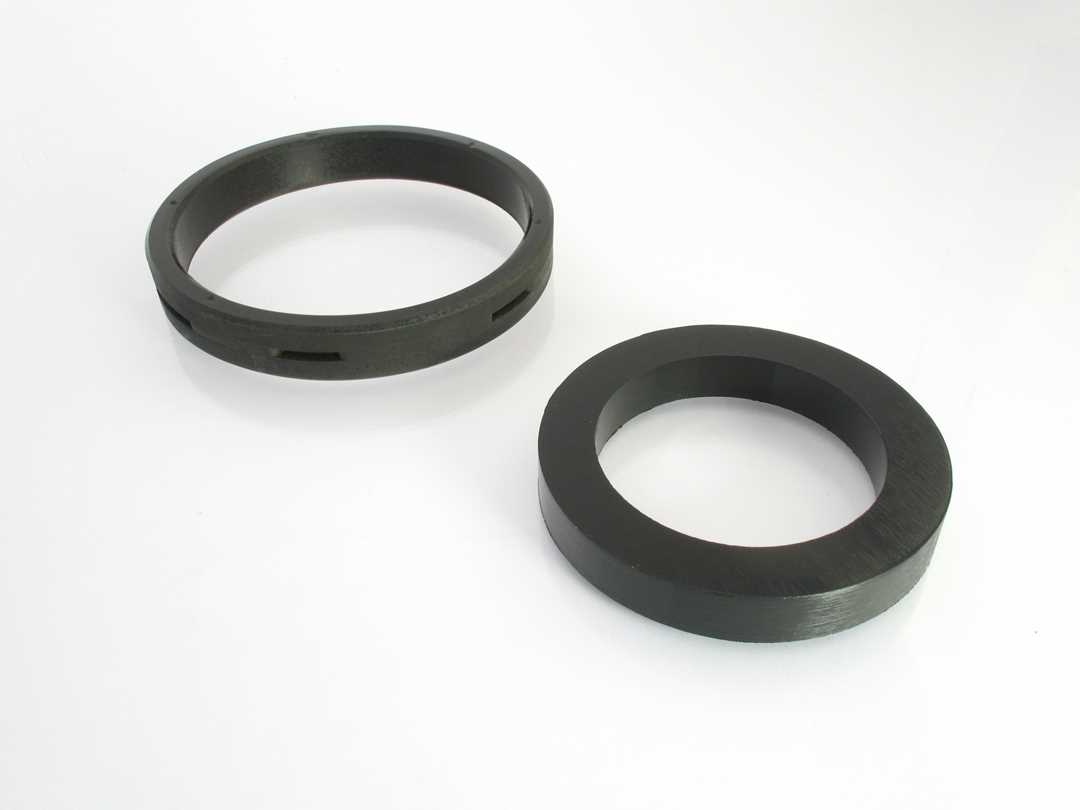
From mold — Molding each washer individually allows very tight tolerances. Edges cannot have a 0 radius due to mold manufacturing requirements. It is the ideal solution for small batches that require good surface finish and precise tolerances.
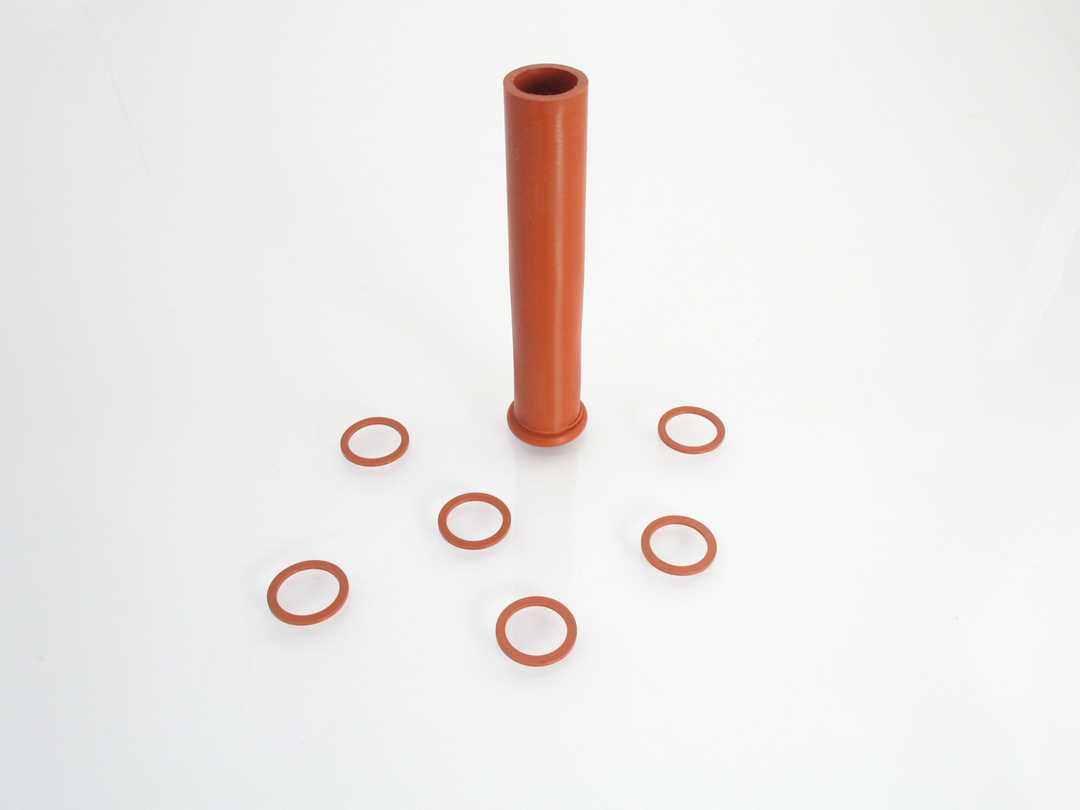
From molded sleeve — The rubber sleeve is molded with the exact inner and outer diameters of the washer to be produced, then cut to the desired thickness with special machinery. The result is perfectly flat gaskets with sharp 0-radius edges, also ideal for automatic assembly.
Available materials
The choice of compound and hardness is decisive: even small variations can significantly affect elasticity, deformation and gasket life. We produce rubber flat seals in NBR EPDM, as well as SBR, VMQ and other technical compounds for industrial use.
| Compound | Temperature range | Property | Typical applications |
| NBR (Nitrile) | -40 / +130 °C | Mineral oil resistance | Hydraulics, automotive |
| EPDM | -40 / +100 °C | Water, steam, ozone, UV | Outdoor, photovoltaic |
| VMQ (Silicone) | -60 / +200 °C | High temperatures, biocompatible | Food, medical |
| FKM (Viton®) | -10 / +180 °C | Aggressive oils and solvents | Chemical, automotive |
| NR / SBR | -50 / +90 °C | Mechanical elasticity | Antivibration, general |
Frequently asked questions
What is the minimum production batch?
Barbieri Rubber flat gaskets are produced to order. The minimum production batch is 10,000 pieces.
What is the difference between mold production and molded sleeve production?
Mold production is ideal for small quantities with tight tolerances. Molded sleeve production is more cost-effective for large quantities and ensures sharp edges, perfect flatness and automatic assembly capability.
Can gaskets be custom-made from drawing?
Yes. Barbieri Rubber manufactures custom flat rubber gaskets from technical drawings, selecting the most suitable compound and production process for the application.
How do I choose the right compound?
The choice depends on the operating environment: NBR for contact with oils and greases, EPDM for outdoor use or weathering exposure, VMQ for high temperatures or food applications, SBR for general use.
