


Description
Cone Rubber Caps for Sealing, Masking and Protection
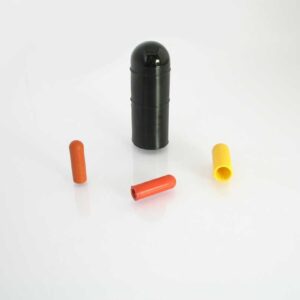
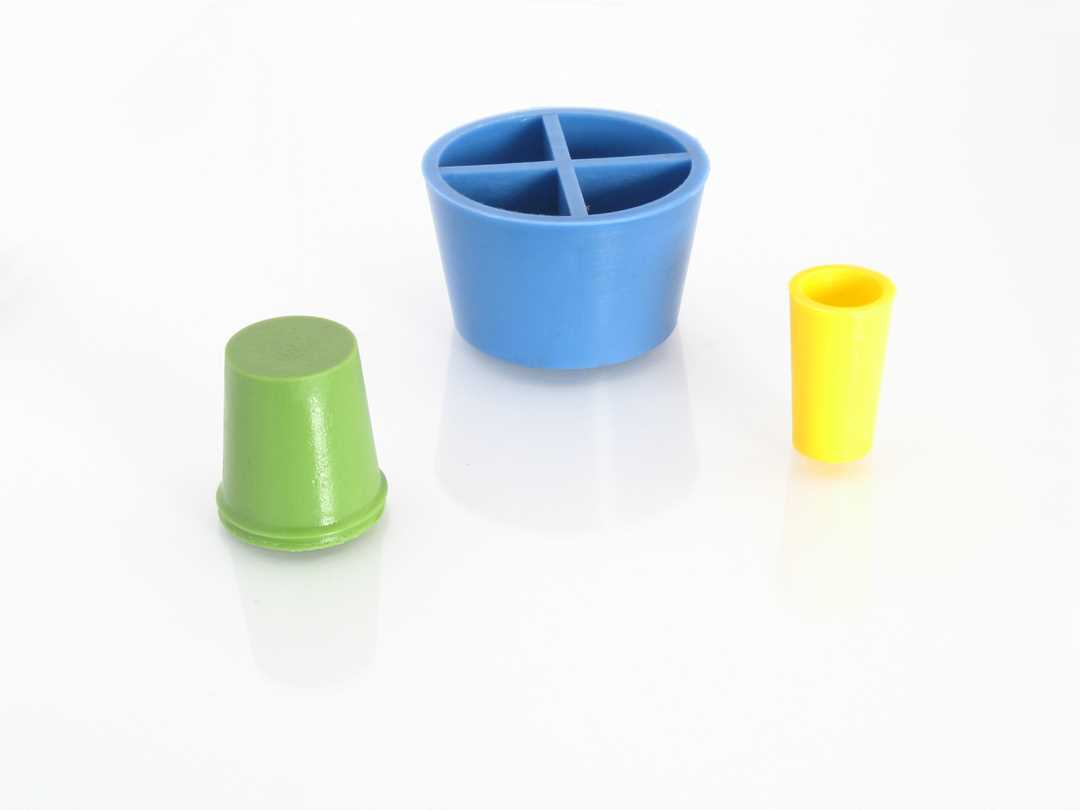
Barbieri Rubber cone rubber caps are tapered caps that self-center in the hole and fit a range of diameters. They are catalog rubber components, available in multiple sizes and compounds, and are particularly appreciated for paint masking and temporary closing of threaded holes during transport and storage
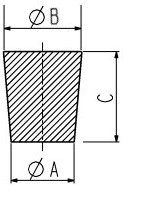
| Code | For screw | Ø A (mm) | Ø B (mm) | Lenght C (mm) |
| ETCS001.5 | M2 / M3 / M4 | 1,5 | 4,5 | 15 |
| ETCS002 | M2 / M3 | 2 | 6 | 22 |
| ETCS004 | M4 / M6 | 4 | 8 | 23 |
| ETCS008 | M7 / M8 | 8 | 12 | 25 |
| ETCS010 | M9 / M12 | 10 | 14 | 30 |
| ETCS014 | M14 / M18 | 14 | 18 | 30 |
| ETCS015 | M15 / M20 | 15 | 21 | 30 |
| ETCS016 | M16 / M22 | 16 | 22 | 40 |
| ETCS017 | M17 / M23 | 17 | 24 | 33 |
| ETCS021 | M21 / M25 | 21 | 26 | 30 |
| ETCS024 | M24 / M32 | 24 | 31 | 30 |
| ETCS030 | M30 / M36 | 30 | 37 | 32 |
| ETCS036 | M36 / M45 | 36 | 46 | 32 |
| ETCS043 | M43 / M52 | 43 | 53 | 32 |
| ETCS046 | M46 / M55 | 46 | 56 | 50 |
| ETCS057 | M57 / M68 | 57,7 | 68,5 | 25 |
| ETCS069 | M69 / M88 | 69,9 | 88,9 | 38 |
| ETCS088 | M88 / M127 | 88,9 | 127 | 51 |
What a cone cap is for
Cone caps are the most versatile solution for temporary hole closure, because a single SKU covers a range of diameters thanks to the tapered shape. The cap self-centers during insertion and locks by friction when it reaches the section matching the hole diameter. Typical for thread masking, temporary pipe closure, protection of hydraulic and pneumatic fittings, and hole isolation during painting.
Available compounds and typical hardness
For paint masking the most common compound is VMQ silicone, since it withstands oven cycles and can be reused. NBR for environments with oils, FKM (Viton®) for aggressive chemicals, NR/SBR for general use. The tapered shape allows operation across a wider hardness range than cylindrical caps.
| Compound | Temperature range | Feature | Typical applications |
| EPDM | -40 / +100 °C | Water, steam, ozone resistance | Painting, outdoor |
| NBR (Nitrile) | -40 / +130 °C | Mineral oil resistance | Workshops, hydraulics |
| VMQ (Silicone) | -60 / +200 °C | High-T resistance, reusable | Oven painting, high-T |
| FKM (Viton®) | -10 / +180 °C | Aggressive oils, solvents | Chemical, automotive |
| NR / SBR | -50 / +90 °C | Good mechanical elasticity | General caps, masking |
Catalog standard version and custom designs
The standard range of cone caps covers the most requested diameter ranges on the B2B market, with active molds at Barbieri Rubber and no tooling cost for the customer. For special sizes, dedicated compounds or colors we produce cone caps to drawing: at least a preliminary drawing from the customer is required, indicating the two end diameters, useful length and desired compound. The dedicated mold is built in cooperation with trusted tooling partners.
Industrial applications
Cone caps are used on painting lines for thread masking, in machine shops for temporary hole closure, in hydraulics and pneumatics to protect fittings, in shipping and storage to close pipes and fittings, in automotive and vehicle service equipment for component protection during assembly. They are among the most requested catalog rubber components for temporary protection applications.
Frequently asked questions
What is the advantage of a cone cap over a round cap?
A single cone cap covers a range of diameters thanks to the tapered shape: the cap self-centers and locks by friction at the right section. It reduces the number of stocked SKUs when working with slightly variable hole diameters.
Are they suitable for paint masking?
Yes, in VMQ silicone they withstand oven cycles and are reusable. The tapered shape also makes removal easier after painting.
Are they available from stock?
Yes, the most recurrent diameter ranges are standard catalog rubber components, with no tooling cost for the customer. For special sizes the custom-design version applies.
Can I order colored cone caps?
Yes. On request we produce caps in dedicated colors for visual identification (e.g. red for painting line). Coloring is agreed at order stage.
Are they reusable after the painting oven?
In VMQ silicone, cone caps can be reused over multiple paint cycles. Lifespan depends on oven temperature and history of previous cycles.