



Description
Rubber and Silicone Caps for Protection and Paint Masking
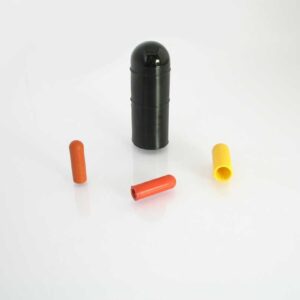
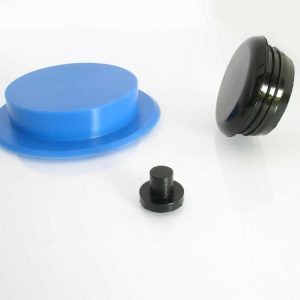
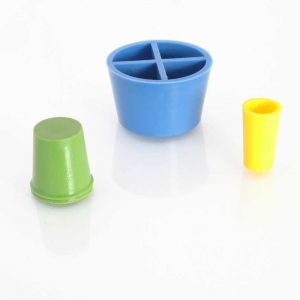
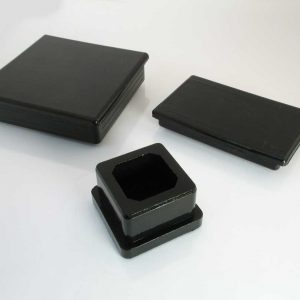
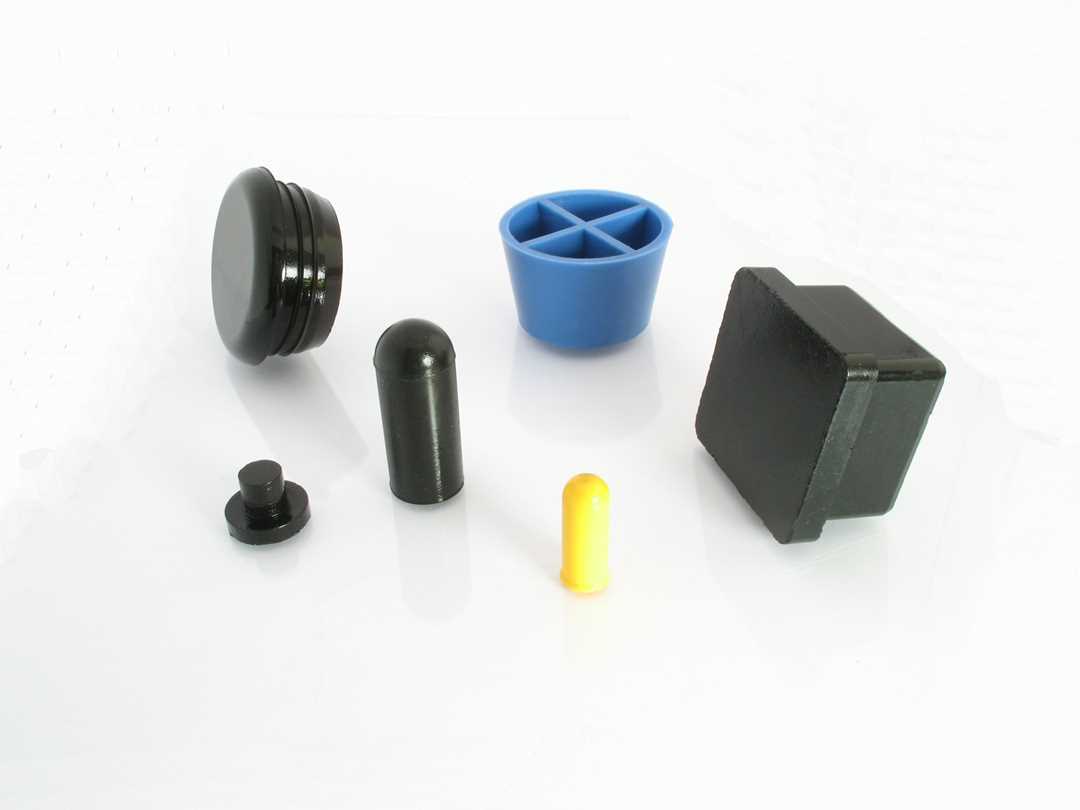
Barbieri Rubber’s rubber paint protection caps are used for closing, protecting threads and holes and for masking during industrial painting processes. The catalog includes protection caps, closure caps and flange caps in standard NBR, EPDM and VMQ silicone compounds, plus high-temperature silicone masking caps for paint-oven applications. Main geometries are round with flange, square with flange, cone and thread protections.
Rubber caps types
The family includes: round caps with flange to close through holes and circular tubes; square caps with flange for square sections and profiles; cone caps to cover holes with variable diameter and ease insertion; paint protection caps to mask threads, holes and areas that must not receive the coating. All caps are engineered to be reusable across multiple cycles, with consistent fit repeatability.
Silicone caps for paint oven
Silicone masking caps are engineered to withstand the curing cycles typical of powder and liquid paint booths. The VMQ silicone used resists oven temperatures without degradation, maintaining elasticity and seal capability on threads. The range includes thread protection caps M3-M30 and above, masking caps for standard holes and dedicated masking parts for recurrent geometries in automotive and metal furniture industries.
EPDM and NBR caps for other industrial uses
For applications that do not require oven resistance we use EPDM (UV, water, ozone exposure) and NBR (oils and fuels). EPDM caps are common on hydraulic equipment, while NBR caps are used on oil-hydraulic and automotive components. Compound selection depends on the operating environment of the protected component.
| Compound | Temperature range | Chemical resistance | Typical applications |
| NBR (Nitrile) | -40 / +130 °C | Mineral oils, fuels | Hydraulics, automotive |
| EPDM | -40 / +100 °C | Water, steam, ozone, UV | Hydraulics, outdoor, photovoltaic |
| VMQ (Silicone) | -60 / +200 °C | High temperature, biocompatible | Food, medical, high-T |
| FKM (Viton®) | -10 / +180 °C | Aggressive oils, solvents, fuels | Chemical, automotive, hydraulics |
| HNBR | -20 / +160 °C | Oil + high temperature | Heavy-duty hydraulics |
| NR / SBR | -50 / +90 °C | Good mechanical elasticity | Anti-vibration, general |
Standard catalog and made-to-drawing caps
The standard rubber caps range covers the most requested sizes in round, square, cone and thread-protection geometries. For non-standard sizes we manufacture caps to drawing starting from the drawing supplied by the customer, even preliminary: at least a draft drawing is always required for any custom production. The dedicated mold is built in cooperation with toolmaking partners.
FAQs
What are rubber caps for?
Rubber caps are used to close or protect holes, threads and tubes in industrial environments. The main functions are mechanical protection, paint masking and temporary or definitive closure of tubes and holes. They are reusable across multiple cycles thanks to compound elasticity.
What is the difference between cone caps and flange caps?
Cone caps have a frustum geometry that adapts to variable-diameter holes and is push-fit; flange caps include a stop collar that limits insertion and ensures a precise position. Selection depends on required precision and on hole geometry.
Can rubber caps be reused?
Yes. Most rubber caps are reusable across multiple masking cycles, as long as the compound retains elasticity and sealing capability. Service life depends on the compound chosen and on operating temperatures.
Can I order caps to drawing?
Yes. For non-standard sizes we manufacture caps to drawing starting from the drawing supplied by the customer, even preliminary. The dedicated mold is built in cooperation with toolmaking partners.