




What Are Rubber Bellows? Guide to Types, Uses and Materials
Rubber bellows — also called protective bellows, rubber boots or accordion seals — are molded elastic components with a corrugated profile used to protect moving parts in machines, vehicles and industrial equipment. The accordion geometry allows the bellow to compress and extend repeatedly as the protected component moves, maintaining a continuous seal around shafts, spindles, rods, guides and cylinders. This page covers types, applications, compound selection and ordering options for rubber bellows.
How rubber bellows work
A rubber bellow fits over the moving part — a spindle, a shaft, a rod — and is fixed at both ends with clamps, flanges or snap-fit retention. As the part moves through its stroke, the corrugated bellow compresses and extends to follow it while keeping swarf, metal dust, coolant, aggressive fluids and dirt away from the surface underneath. At the same time, the bellow retains any lubricant applied near the contact zone, extending service life and reducing maintenance frequency. For applications with combined rotary and linear motion — universal joints, articulated shafts, joystick control levers — conical or boot-type bellows provide the angular deflection capacity required.

Types of rubber bellows: which one to choose
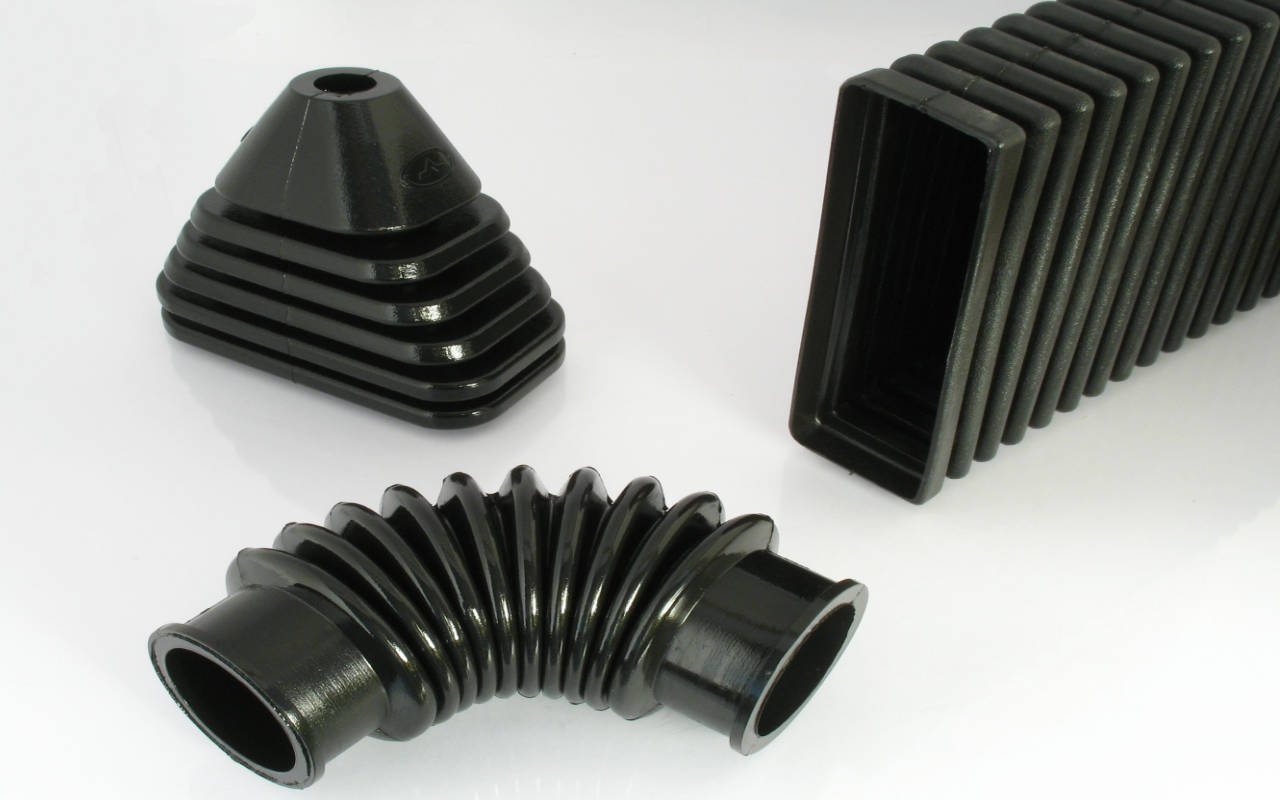
Cylindrical rubber bellows are the most common type: a round corrugated profile for spindles, rods and rotating shafts with linear stroke. Rectangular rubber bellows cover square and rectangular linear guides on machine tools and handling systems. Modular bellows are assembled from single molded elements to cover variable or irregular lengths — the preferred choice for telescopic guides and custom strokes without a dedicated mold for the full length. Conical rubber bellows connect sections of different diameter and follow angular deflections: used in linkages, joints, cardan shafts and articulated mechanisms. Joystick rubber boots are a specific sub-type of conical bellow, designed for control levers on agricultural machinery, construction equipment and industrial vehicles.
Main applications of rubber protective bellows
Machine tools are the largest application sector: CNC machining centres, milling machines, lathes, grinding machines and turning centres all use rubber protective bellows on spindles, axes and linear guides. The bellow prevents swarf and coolant from reaching the precision guideways underneath, extending machine life and maintaining positional accuracy. Hydraulic and pneumatic cylinders use rubber boots to protect the rod from contamination and physical damage. Agricultural machinery, construction equipment and off-highway vehicles use conical bellows and joystick boots on control levers, articulated joints and suspension elements. Industrial automation equipment uses cylindrical and rectangular bellows to protect linear actuators, rack-and-pinion drives and servo axes.
How to choose the right compound for rubber bellows
The compound determines chemical resistance, temperature range and mechanical properties. NBR (Nitrile) is the standard for contact with mineral oils — the default for hydraulic and automotive applications. EPDM resists water, steam, ozone and UV, making it the choice for outdoor installations and water-hydraulic systems. Silicone (VMQ) covers the widest temperature range (-60/+200 °C) and is used in food industry, medical applications and high-temperature environments. FKM (Viton®) resists aggressive oils, fuels and solvents for the most demanding chemical environments. Neoprene provides general-purpose mechanical and chemical resistance. Hardness (Shore A) is selected based on stroke length, frequency and required flexibility: softer compounds flex more easily over long strokes; harder compounds offer greater structural stability for short, high-frequency cycles.
Standard catalog and made-to-drawing rubber bellows
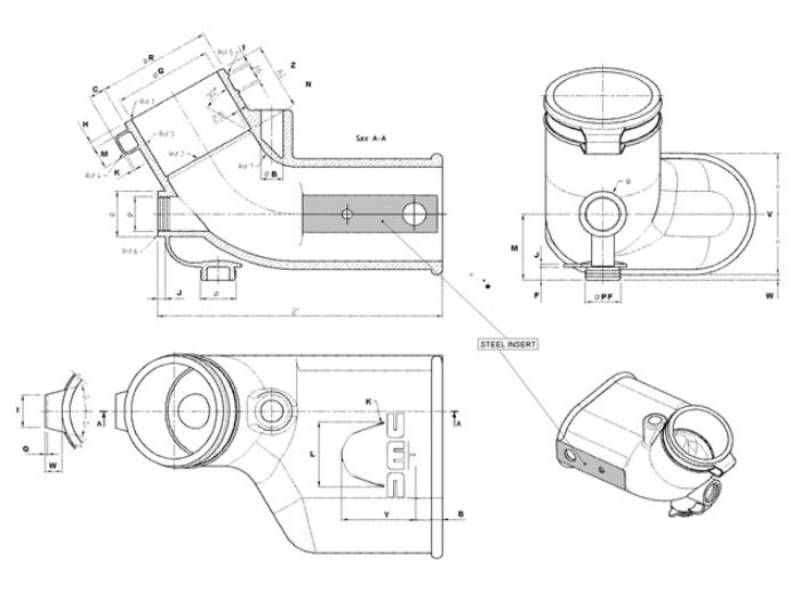
Barbieri Rubber produces both standard catalog rubber bellows — with active molds and no tooling cost — and custom industrial rubber bellows manufactured to the customer’s drawing. The standard range covers the most common geometries in NBR and EPDM. For non-standard dimensions, specific compounds, rubber-to-metal bonded assemblies or custom flanges, a made-to-drawing production starts from a draft drawing with the main dimensions: inner bore, outer diameter, extended and compressed length, wall thickness, and compound. All molding is carried out in-house at our plant in Reggio Emilia, Italy.
FAQs
What is a rubber bellow?
A rubber bellow (also called protective bellow or rubber boot) is a molded elastic part with a corrugated accordion profile. It is installed over a moving component — a shaft, spindle, rod or guide — and contracts and expands with the movement to keep dust, swarf, coolant and contaminants out and lubricant in.
What are rubber bellows used for?
Rubber bellows are used to protect moving parts in machines and vehicles: spindles and axes on CNC machine tools, rods on hydraulic and pneumatic cylinders, linear guides on industrial equipment, joystick levers on agricultural and construction machinery, and articulated joints in vehicles and automation systems.
What is the difference between cylindrical and rectangular rubber bellows?
Cylindrical rubber bellows have a round cross-section and are used on circular-section parts: spindles, rods, shafts. Rectangular rubber bellows have a square or rectangular cross-section and are used to protect flat linear guides on machine tools and handling equipment. Modular and conical types cover variable lengths and angular deflections respectively.
How do I order custom rubber bellows?
Contact Barbieri Rubber with a drawing or sketch showing the main dimensions: inner bore at both ends, outer diameter, extended and compressed lengths, wall thickness, and operating environment (temperature, fluids present). Even a preliminary drawing is sufficient to start the evaluation. We will confirm compound, geometry and tooling requirements.
Main Article Categories
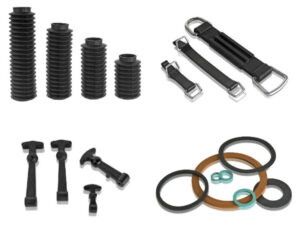
We design and manufacture Molded Rubber Bellows, Standard and Custom Rubber Articles of any types for many industrial and civil sectors and multiple uses.
Barbieri Rubber. Contact us for more information.
Tel: +39 0522 550433 | Mail: sales@barbierirubber.it
